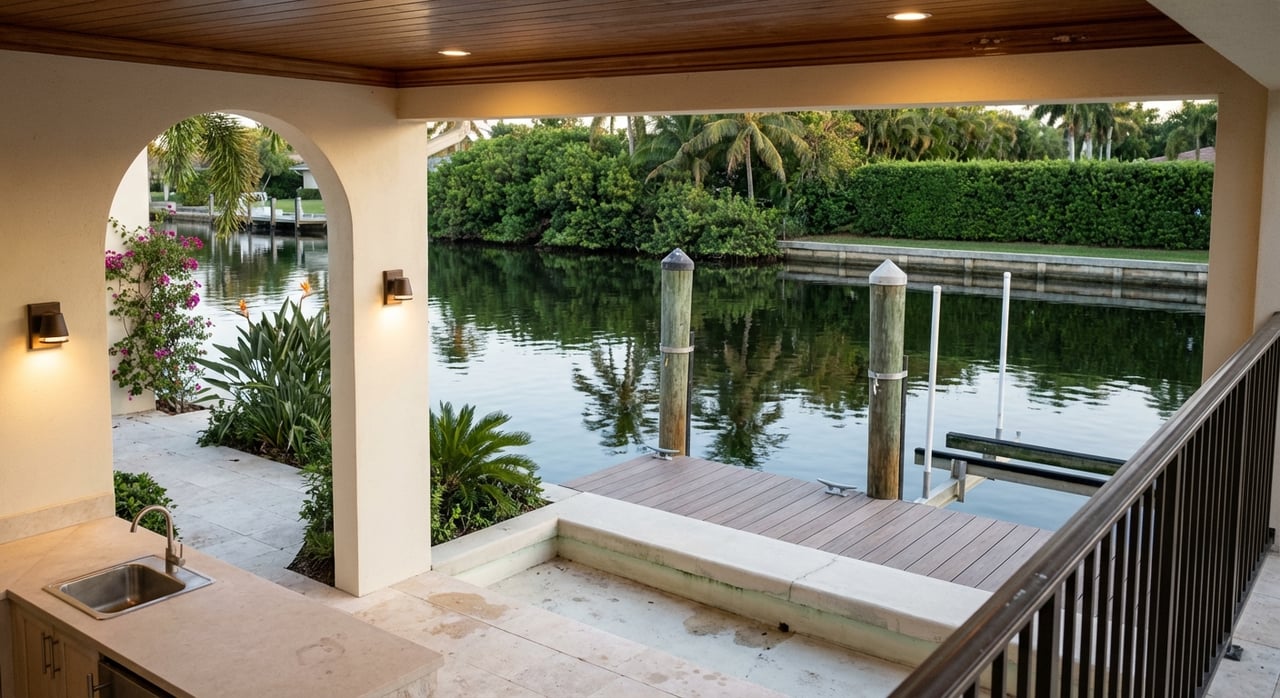
If you have ever wondered why two seemingly similar Port Royal or Aqualane Shores waterfront homes can sell millions apart, you are not alone. On paper, both may offer wide water views, a pool, and a dock. In reality, small differences in water type, depth, frontage, permits, and club eligibility change value in very real ways. In this guide, you will learn the price drivers that matter most, how to evaluate them, and how to use recent high-end sales to set your expectations. Let’s dive in.
The headline numbers today
Naples’ premier waterfront addresses continue to reset expectations. A Port Royal bayfront estate at 575 Admiralty Parade W reportedly traded around $85 million, underscoring how unique scale and frontage can command rarified pricing according to regional business coverage. A separate assemblage of three Gordon Drive beachfront parcels reportedly sold for about $225 million, a reminder that uninterrupted beachfront and combined lots attract extreme premiums as documented in archived reporting.
Not every sale sets records, but the logic is the same. Consider a Port Royal bayfront at 3675 Fort Charles Drive that closed at $36,490,000, with listing records citing large bay views and a substantial concrete floating dock with Gordon Pass access as clear value points per the sold record. In nearby Aqualane Shores, deepwater canal and bayfront properties continue to perform at the ultra-luxury level, including a reported $18,000,000 sale at 960 17th Avenue South in the first half of 2025 shared by Christie’s International Real Estate.
The takeaway is simple. Port Royal and Aqualane Shores are top-tier waterfront markets, and price is a function of precise attributes that you can verify.
What really drives waterfront value
Waterfront type and Gulf access
Not all “waterfront” is equal. Gulf-front parcels are the rarest and typically carry the highest land value because they combine sand, surf, and panoramic views with scarce supply. Recent record benchmarks were either beachfront or very large bayfront compounds, which shows how direct Gulf adjacency and lot scale add premiums as highlighted in market coverage.
Bayfront lots in Port Royal offer wide water vistas and, in many cases, direct access through Gordon Pass. That access, paired with substantial frontage and a functional dock, is a known value booster. The Fort Charles sale is a clear example where bay views plus serious dockage supported a premium per the listing record.
Canal-front parcels, common in Aqualane Shores and parts of Port Royal, vary widely. Some canals are deep and direct with unobstructed routes to the Gulf. Others may be narrower, shallower, or have more winding approaches. When a canal offers deep water, solid width, and favorable orientation, it can price close to premium bayfront. The reported $18,000,000 Aqualane Shores sale signals how meaningful deepwater frontage can be for buyers who value boating per Christie’s network reporting.
Boat access, depth, and dock design
For many buyers, the dock is the real front door. Depth at the dock and along the approach route determines what boat you can safely bring home. Local cruising guides note that typical approach and anchorage depths in the Port Royal and Gordon Pass area often range in the mid single digits, depending on exact location and tide windows. If you are a large-yacht owner, confirm the charted controlling depth, your tide strategy, and whether the dock is engineered and permitted for your vessel size as covered in regional cruising resources.
Dock capacity and design also move price. Long concrete or floating docks, large-capacity lifts, and T-configurations add utility. A site with a fully permitted, well-built dock is worth more than the same site without one. If a dock lacks permits or needs upgrades, expect time and cost. Permit specialists outline how state and federal approvals typically layer together and how certain projects may qualify for streamlined paths when they meet specific conditions summarized in permitting guidance.
Lot frontage, orientation, and buildable envelope
At the top of the market, frontage feet and lot width tend to outweigh lot depth. Buyers pay for the length of uninterrupted water and for view orientation. Sunset or wide-bay sightlines are prized by many. Beyond views, study what you can actually build. Setbacks, the Coastal Construction Control Line, and local building rules shape the scale and placement of a future home. Before you price for a potential new build, verify the buildable envelope with a site plan and the applicable regulations using local references and regulatory summaries.
Seawall and flood elevation
Seawall or bulkhead condition is not cosmetic. A recent replacement with documentation is a positive that can support price. A failing wall is a negotiation lever that can cost real dollars to remedy. High-end listings routinely call out new seawalls and robust docks as value points, and buyers often prioritize them in offers as seen in notable sold listings.
Confirm the FEMA flood zone and obtain an Elevation Certificate when available. Flood zone and required finished-floor elevations will impact insurance pricing and any remodel or new construction plan. Elevation is a real cost driver, not an afterthought.
Club eligibility and neighborhood scarcity
Port Royal Club eligibility has market value. Listing copy and broker commentary often present membership eligibility as a differentiator that adds to the lifestyle and to pricing power. The Club’s current redevelopment is a neighborhood-scale investment that listing agents cite as a positive tailwind for the area outlined by the project builder. Remember that “eligibility” is not the same as a guaranteed membership transfer. Confirm membership categories, fees, and timing directly with the Club.
Condition, architectural pedigree, and rebuild economics
Much of the ultra-luxury value in Port Royal and Aqualane Shores rests in the land and the ability to create a modern estate. Recent trades show buyers often plan comprehensive renovations or teardowns where the lot and location merit it. Newer construction with clean coastal design continues to trade strongly because it removes time and permitting risk that many buyers wish to avoid.
A step-by-step valuation checklist
Use this quick framework to price or evaluate a specific property:
- Confirm waterfront type and measured frontage feet. Request a current survey that shows how frontage was measured.
- Gather all dock permits and as-builts. Confirm lift capacity, pile age, and any dredging history. If permits are missing, budget time and cost for approvals per permitting experts.
- Inspect the seawall. Ask for the last inspection report and any repair invoices. Adjust valuation for condition.
- Verify FEMA flood zone and obtain an Elevation Certificate. Understand how this affects insurance and build requirements.
- Map the buildable envelope. Check setbacks and applicable coastal construction lines to verify scale and placement with regulatory resources.
- Confirm club eligibility and costs. Ask about initiation fees, dues, and any wait times.
- Pull recent comps of the same waterfront type. Avoid mixing beach, bay, and canal comps. Treat record assemblages as special cases.
- Price the plan. Get estimates for a renovation and a full teardown-new build so you can compare net outcomes apples to apples.
Aqualane Shores vs. Port Royal pricing patterns
You will see overlap between the two markets, but also clear differences. Port Royal includes some of Naples’ largest bayfront and beachfront compounds. Those unique sites can set county records because they blend scale, frontage, and amenity packages that are genuinely scarce as recent headlines show. Aqualane Shores, by contrast, features a high share of canal and bayfront parcels where depth, width, and orientation vary block by block. When an Aqualane site offers deepwater access and generous frontage, it can trade at ultra-luxury levels, as the reported $18,000,000 sale at 960 17th Avenue South demonstrates per Christie’s reporting.
On both sides of the canal, remember that buyers are often paying for what the site allows them to build and enjoy for years. That is why frontage, depth, permits, and elevation matter so much.
Timing, permits, and other frictions that change price
Waterfront improvements usually require layered approvals. Dock and shoreline work often needs state and federal authorization before county permits are issued. Projects that meet set criteria may be eligible for streamlined paths, which can reduce waiting time. Missing paperwork can delay a buyer’s plans and impact value, so it pays to confirm permit status early as permitting summaries explain.
Activities such as dredging or certain seawall work can trigger additional reviews. Plan for the possibility of State 404 coordination or federal review when fill or dredge is involved as outlined in regulatory summaries. At the neighborhood level, factor in timing for amenity upgrades. The Port Royal Club rebuild is broadly viewed as a positive, but any large project carries schedule risk that markets may price in before completion per the builder’s project overview.
How to use recent comps without getting misled
Treat each comp as a case study in the attributes above. A premium bayfront like 3675 Fort Charles Drive combined wide water, a serious dock, and a large buildable footprint, which supports a high price for a non-beachfront lot. Record-level sales at very large bayfront or beachfront estates reflect unique scarcity rather than a simple price per foot for typical parcels. In Aqualane Shores, the strongest sales tend to show deepwater access and generous frontage. When you compare across neighborhoods, only mix in comps that match the same waterfront type, access, and lot scale.
The bottom line
Waterfront pricing in Port Royal and Aqualane Shores is not a mystery. It is a checklist. When you control for waterfront type, boat access, frontage, buildable area, seawall condition, flood elevation, club eligibility, and the likely cost of your plan, values come into focus.
If you want a precise read on a specific property, a private, data-backed consultation will save you time and help you avoid costly surprises. Connect with Kim Price for a confidential discussion tailored to your goals.
FAQs
How much does Port Royal Club eligibility affect price?
- Listing commentary consistently treats eligibility as a positive amenity, and the ongoing clubhouse redevelopment is viewed as a neighborhood upgrade. Always confirm exact membership rules and fees with the Club as outlined by the project overview.
Why do two similar canal homes sell for very different prices?
- Differences in dock depth and permits, how much frontage is private, seawall age, view orientation, privacy, and the buildable envelope often explain large price gaps. Buyer intent to remodel or rebuild also changes how land and structure are valued as seen in notable listings.
What should I verify about a dock before I offer?
- Confirm permits, as-built surveys, lift capacity, and any dredging or maintenance agreements. A permitted, well-built dock is a strong positive, while missing permits or structural issues reduce value and can add months to your timeline per permitting guidance.
How do water depths near Gordon Pass impact yacht owners?
- Depths vary with location and tides. Large-vessel owners should verify controlling depths, tide windows, and whether their dock design and permits fit the intended vessel size using charts and local cruising guides as referenced here.
Are record beachfront assemblages useful comps for typical lots?
- Use them cautiously. Assemblages and unique compounds often reflect strategic land value not comparable to standard single-lot homes. Match comps by waterfront type, access, and lot scale per recent headlines.